Medicare Wants to Rein In At-Home Health Monitoring. Is It Cutting Fat or Muscle?
Original on LinkedIn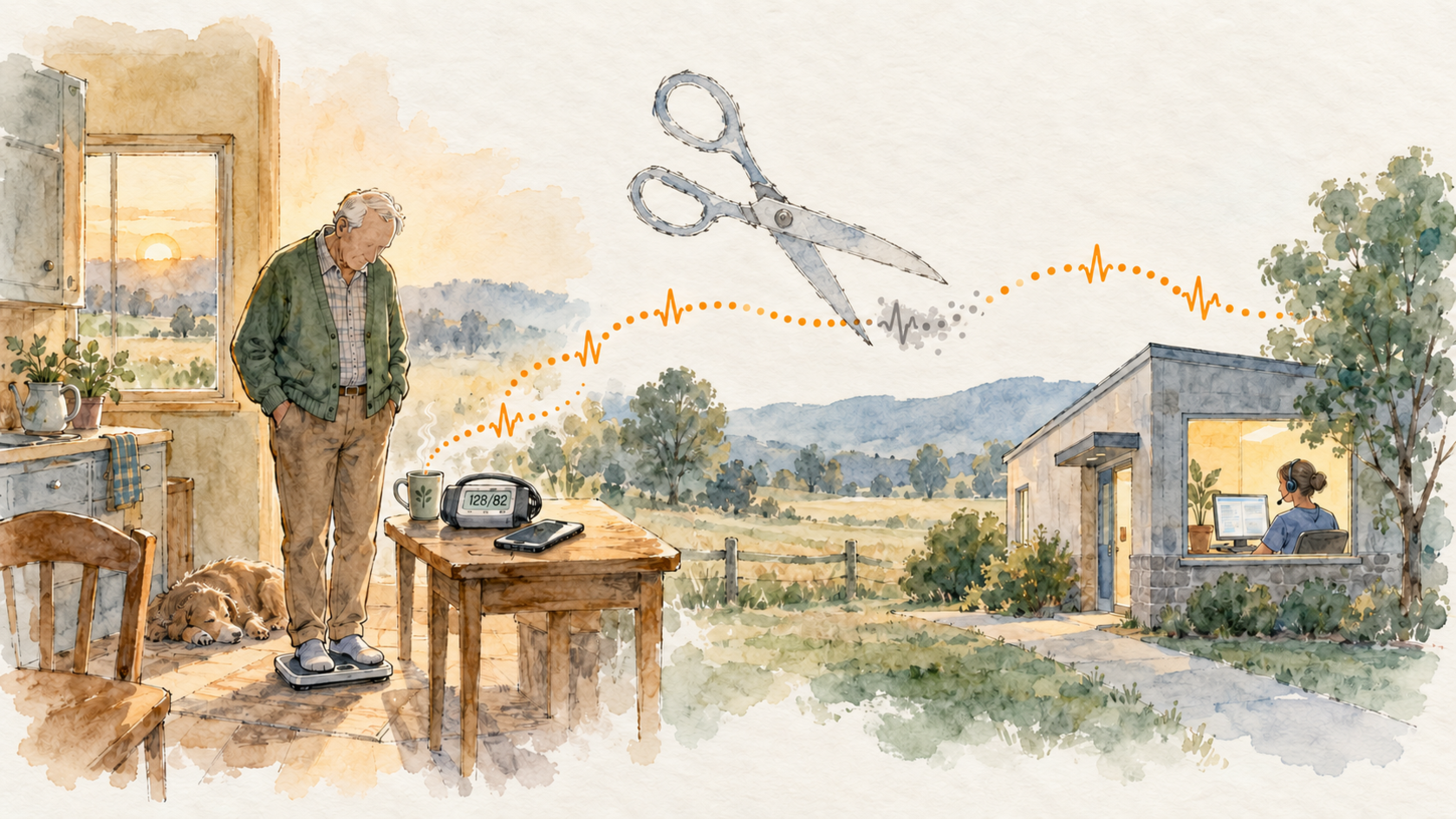
Every morning for nearly five years, a legally blind man in rural northwestern Pennsylvania has stepped on a scale. He can't read the display, so the pharmacist-led team that monitors him texts him the number and his phone reads it aloud. He has heart failure, diabetes, high blood pressure and kidney disease. He has taken more than 1,500 readings, and since enrolling he has had no readmissions for heart failure. On one routine call after a heart procedure, the team discovered he had filled only one of his two new prescriptions. "No one else was positioned to find that," wrote Thea Blystone, the pharmacist who founded the program, "because nothing in the system looks at a patient between visits."
Blystone told Medicare that under a rule it proposed this summer, that care "would simply stop." She was one of more than 4,000 people who commented on the remote-monitoring part of the proposal. Their comments give an unusually detailed picture of a hard question: how do you stop waste in a fast-growing benefit without shutting down the parts that work?
What remote monitoring is
Remote patient monitoring sounds high-tech, but the idea is simple. A patient gets a blood pressure cuff, scale or pulse oximeter that sends readings to their care team over a built-in cellular connection. A nurse, pharmacist or medical assistant watches the numbers and calls when something looks wrong. Medicare pays separately for three things: setting the patient up, supplying the device each month, and the staff time spent reviewing readings and talking with the patient.
The benefit has taken off. According to a claims analysis commissioned by the Peterson Center on Healthcare, about 44,000 people in traditional Medicare used it in 2019. By 2025 the number was nearly 700,000, and annual spending had risen from under $7 million to about $293 million. Most of it is for high blood pressure.
-
A doctor decides it fits
At a visit, the doctor decides that monitoring suits the patient's condition and gets their consent. “Enrollment begins with the physician's consent to treat,” writes Tendco Health.
- Medicare pays
- For the visit, as usual
-
Setup
A cellular cuff, scale or pulse oximeter is shipped to the patient, and staff teach them how to use it.
- Costs
- $90–120 per device, plus about 10% for shipping, returns and replacements (Prevounce, Tendco). A heart-failure patient may need two devices, but the practice can bill for only one.
- Medicare pays
- About $20, once
-
Readings flow in
The patient takes readings at home. The device sends them over its own cellular connection, so no home internet is needed, to software that flags worrying numbers.
- Costs
- About $10–12 per patient per month for data and software (Tendco, Prevounce). About 10% of devices are lost or stolen each year (Michigan Medicine).
- Medicare pays
- About $41–52 a month for the device, in months with at least 2 days of readings
-
Staff review and call
A nurse, pharmacist or medical assistant reviews the readings, calls the patient when something looks off, and documents the call.
- Costs
- One full-time nurse (about $94,000 a year) can cover roughly 300 patients, and round-the-clock coverage takes more than one person (a form letter from 73 clinicians)
- Medicare pays
- About $50 for the first 20 minutes each month, with smaller payments for more time
-
The doctor decides
Staff escalate concerns, and the doctor adjusts the patient's medications or care plan. In one vendor's programs, 8.6% of patients a month trigger a call to the doctor, and the doctor signs off on every patient's monthly report (Prevounce). “A pharmacist can recommend. Only the physician decides” (Tendco).
- Medicare pays
- Covered by the monthly time payment in step 4
Why Medicare is worried
Some of that growth has been troubling. The federal government's internal watchdog, the HHS Office of Inspector General, found companies cold-calling seniors to sign them up. It also found that many enrolled patients weren't getting all three parts of the service.
Academic researchers with no financial stake in the industry have found a more subtle problem. A team from Columbia and Brown reported in their comment that a quarter of practices account for half of all Medicare spending on the service. Those practices keep patients enrolled for about 18 months on average, and their patients are no sicker than anyone else's. The researchers' earlier work found that most medication adjustments happen in the first four months of monitoring. Yet "64% of RPM spending occurs after month 6," they wrote. Nothing in the current system nudges anyone to stop.
Show the numbers
| Practices | Avg. cost per episode | Avg. length | Share of spending |
|---|---|---|---|
| Lowest-cost quarter | $248 | 2.6 mo | 6.5% |
| Second quarter | $710 | 7.5 mo | 14.8% |
| Third quarter | $1,241 | 12.2 mo | 28.5% |
| Highest-cost quarter | $2,324 | 17.7 mo | 50.2% |
Even many of the program's defenders accept that this problem is real. The fight is over the fix.
What Medicare proposed
The proposed 2027 Physician Fee Schedule contains four main changes:
- Pay far less for the device. Medicare would price the monthly device payment as if the patient had bought their own cuff and phoned in their readings, a service that carries no equipment cost. Medicare's stated reason is that it has "received very little invoice or pricing information" about the devices actually used, so it believes the codes "may be" overvalued. The American Medical Association and others calculate that the device payment falls about 80% once fully in effect. A federal cap on one-year cuts spreads most of it into 2028.
- Stop paying for staff time. Medicare would remove the portion of payment that covers clinical staff, saying it doesn't believe staff are typically involved.
- Require employees only. The staff doing the monitoring would have to work directly for the doctor's practice, not for an outside monitoring company. The aim is to cut out arm's-length vendors.
- Require a visit to start. Monitoring would have to begin at a dedicated visit where the doctor discusses it with the patient.
Medicare also floated replacing the many separate monitoring payments with a single all-or-nothing monthly payment.
Not every idea lacks supporters. Humana and the Blue Cross Blue Shield Association back the employees-only rule. The American College of Physicians "strongly supports" the required starting visit. Insurers generally like the idea of bundling. The pricing changes are another story.
| Organization | Payment cuts | Employees-only staff | Required first visit | Single monthly payment |
|---|---|---|---|---|
| Insurers | ||||
| Humana | · | ✓ | ✓ | · |
| Blue Cross Blue Shield Assn. | · | ✓ | · | ✓ |
| AHIP | · | ✕ | ✕ | ✓ |
| Health systems and hospital buyers | ||||
| Sutter Health | · | ✓ | ✓ | · |
| AHVAP (hospital product evaluators) | ✓ | ~ | ✓ | ~ |
| Think tanks and researchers | ||||
| Paragon Health Institute | ✓ | ~ | ✓ | · |
| Peterson Center on Healthcare | ✕ | ✕ | · | · |
| Columbia–Brown researchers | ~ | ✕ | · | · |
| Bipartisan Policy Center | ✕ | ✕ | · | · |
| Physician and practice groups | ||||
| American Medical Association | ✕ | ✕ | ✕ | ✕ |
| American College of Physicians | ✕ | ✕ | ✓ | ✕ |
| American Academy of Family Physicians | ✕ | ✕ | ✓ | ✕ |
| MGMA (medical practice managers) | ✕ | ✕ | ✕ | ✕ |
| NAACOS (ACOs) | · | ✕ | ✕ | · |
The cost fight
Medicare asked for real cost data, and commenters sent plenty. A month of monitoring, they explained, is more than a device. It also includes a cellular data plan, the software that collects and flags readings, tech support for elderly users, shipping and returns, and replacing lost devices. One industry group compared pricing the service by the device alone to "valuing a mobile communications service based only on the cost of the handset."
Some of the numbers:
- Prevounce Health, a device and software vendor, published its prices: about $99 for a cellular cuff plus $11 a month for software. At the proposed rate, it calculated, "practices would lose more money the longer they monitor each patient."
- MovementRx, which supplies monitoring for physical therapy, reported costs of about $28 per patient-month. Those costs did not fall as it grew more than tenfold, because software and support costs recur every month.
- Michigan Medicine said it spends about $107 per kit each month on software, connectivity and logistics alone, and that about 10% of devices are lost or stolen each year.
- Henry Ford Health put its all-in cost at $1,233 per patient per year and projected a loss of about $309 per patient under the new rates.
Commenters also pointed to a tension between proposals two and three. "CMS cannot treat clinical staff as essential enough to mandate a specific manner of employment and, in the same rule, value such services at zero," wrote Cadence, a remote care company.
Support for the device cut itself was thin. The clearest came from a group of hospital product-evaluation professionals, who agreed that device costs "have declined" and supported revaluing them, while asking Medicare to publish its method. Even the Columbia–Brown researchers, whose data document the overuse, called the package "overly blunt and abrupt."
Who would feel it
Small and rural practices say they would be hit hardest, especially by the combination of lower pay and the employees-only rule. A practice with 15 patients on monitoring can't hire a full-time nurse, let alone staff the phones around the clock. Of the 21 doctors in Blystone's program, she wrote, three could bring the work in-house. "The remaining eighteen do not." In places without reliable home internet, cellular devices are often the only option that works.
Patients weighed in too. About 1,300 sent near-identical letters through an organized campaign that ends: "Fix the problems. Please don't end the program that keeps us safe." Others wrote in their own words. "Without this device I would not have access to immediate medical information that could be important to my health," wrote Theresa Tolle, who has atrial fibrillation and spells of low blood pressure.
The mismatch underneath
Read together, the comments point to a structural problem that neither the current system nor the proposal addresses. Most of a program's costs come up front: buying the device, shipping it, teaching the patient to use it, and the intensive early months of adjusting medications. Medicare, though, pays the same amount every month for as long as monitoring continues.
Under today's rates, Prevounce's figures show a typical blood pressure program only breaks even in its third month. That means short, intensive programs barely cover their costs, while long, low-touch enrollments become profitable. That is exactly the pattern the researchers flagged. A flat cut doesn't change the incentive. It mostly makes the short, intensive programs unaffordable first.
Show the numbers
| After month | Program cost | Paid today | Proposed |
|---|---|---|---|
| 1 | $110 | $52 | $10 |
| 2 | $121 | $104 | $20 |
| 3 | $132 | $156 | $30 |
| 4 | $143 | $208 | $40 |
| 5 | $154 | $260 | $50 |
| 6 | $165 | $312 | $60 |
The alternatives on the table
Commenters offered several other paths:
- Wait for real data. The AMA's physician panel that recommends payment values moved its review of these codes up to January 2027. The AMA argues it is "far better to collect the needed data than to reduce payments without any data."
- Limit episode length. The Columbia–Brown team and the Peterson Center propose capping monitoring at about six months, renewable if still medically needed. Peterson estimates that six months at today's rates would cost Medicare about the same as a full year at the proposed rates ($899 versus $866), while concentrating cuts on the longest-billing practices.
- Police vendors directly. Many commenters suggested registering monitoring companies, as Medicare already does for medical equipment suppliers, and requiring the ordering doctor to be identified on every claim, as the Inspector General recommended.
- Pay for results. Medicare's new ACCESS model ties payment for technology-enabled care to outcomes like blood pressure control. Peterson argues payment should eventually move that way. Today's per-month rates are, in its words, "too high for too long."
What comes next
Medicare usually publishes its final physician payment rule in early November. Each piece can be finalized, changed or dropped on its own: the device price, the staff-time cut, the employees-only rule, the starting visit and the bundled payment. That outcome will show whether Medicare thinks the main problem is the price of the service or how long it runs.
About the sources: Comments are from regulations.gov docket CMS-2026-2377, viewed through the Regulations.gov Comment Browser. There, you can read each letter in full along with AI-generated summaries (remote monitoring cost and pricing, staffing rule, initiating visit, bundled codes, fraud guardrails). Cost figures are commenters' own and have not been independently verified. Savings estimates from health systems are self-reported, not from controlled studies. Summaries, coded positions and other abstractions in this piece were produced with AI and could be wrong; check the linked letters before relying on them.